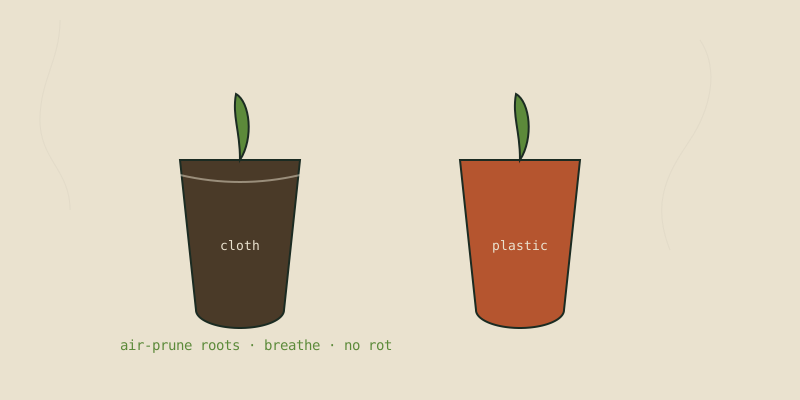
People obsess over soil and seed and then plant into whatever container is cheapest. The container shapes the root system, and the root system is the plant. Here's what I've landed on after killing plenty of plants in the wrong pots.
Why cloth pots win for most of what I grow
Fabric grow bags — I use non-bleached, organic cloth — do something rigid pots can't: they air-prune the roots. When a root hits the fabric wall and reaches air, the tip stops and the plant pushes out new feeder roots behind it. Instead of a circling, root-bound mess, you get a dense, fibrous root ball that takes up water and nutrients far better.
- They breathe, so roots get oxygen and soil doesn't go anaerobic.
- They drain freely, so it's nearly impossible to overwater.
- They don't bake roots the way black plastic does in Texas sun.
- They fold flat and store in nothing when the season's over.
- Non-bleached fabric keeps chlorine-bleaching chemistry out of your root zone — it matters to me for anything I'm eating.
The tradeoff: they dry out faster, so in peak summer you water more often. For me that's a fair trade for healthier roots, and a drip line solves it.
The full container rundown
| Container | Best for | Watch out for |
|---|---|---|
| Organic cloth bag | Almost everything; vegetables, herbs | Dries faster; water more in heat |
| Terracotta | Plants that like dry feet; rosemary, succulents | Heavy, breakable, wicks water |
| Glazed ceramic | Decorative indoor plants | Heavy, pricey, often poor drainage |
| Plastic nursery pot | Cheap propagation, short-term | Roots circle and bind; bakes in sun |
| Self-watering | Thirsty plants, vacations | Can stay too wet for some roots |
| Raised wood bed | In-ground-style growing without the clay | Needs more soil volume up front |
Sizing it right
Too small and the plant stalls and dries out hourly; too big and the unused soil stays wet and sours. Rough guide: herbs and lettuce in 1–3 gallon, peppers and bush tomatoes in 5–7 gallon, big indeterminate tomatoes and small fruit trees in 10–20 gallon. When in doubt, size up one step from what feels right.
Written by Jordan Polasek, founder of Texas Roots, from his greenhouse in El Campo, Texas. Free to share. If this helped, the best thanks is to grow something or pass it along.