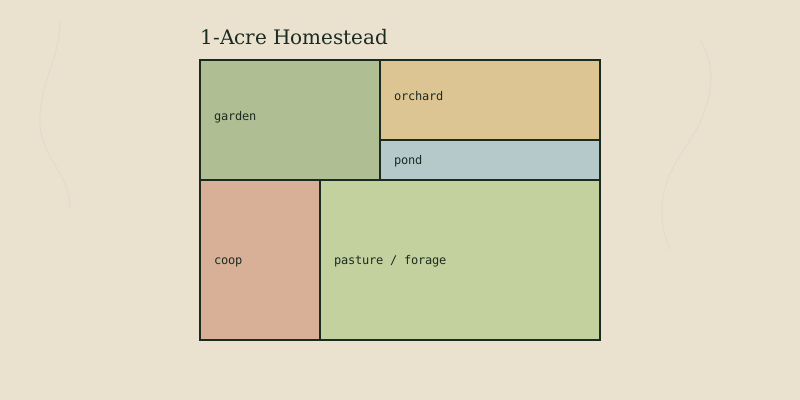
Half an acre is about 21,780 square feet, and a surprising number of suburban lots are close to this once you subtract the house. It's my favorite scale to recommend to beginners: big enough to feed you meaningfully, small enough that one person can keep up with it. The key is vertical growing, succession planting, and ruthless prioritization of high-value crops.
Prioritize by value per square foot
Every square foot is precious at this scale, so grow what gives you the most return. Skip space-hungry, cheap-to-buy crops like field corn or storage potatoes unless you love them. Favor crops that are expensive to buy, productive in small space, or much better fresh.
| High value (grow these) | Low value (buy these) |
|---|---|
| Tomatoes, peppers, herbs | Field corn, wheat |
| Salad greens, spinach | Storage onions |
| Berries, dwarf fruit | Storage potatoes |
| Garlic, specialty veg | Dry beans (unless you enjoy it) |
A half-acre layout that works
- Intensive vegetable beds: 800–1,500 ft² of raised beds and cloth pots, close to the house.
- Espalier and dwarf fruit: trees trained flat against fences save enormous space — a dozen along a property line.
- A small flock: 4–6 hens fit easily and turn kitchen scraps into eggs and compost.
- Vertical everything: trellis cucumbers, beans, melons, and squash up instead of out.
- A greenhouse or hoop tunnel: even a small one, like the one I grow in, doubles your season.
Succession is your superpower
At this scale you can't afford a bed sitting empty. The moment one crop comes out, another goes in. Spring lettuce gives way to summer beans gives way to fall greens in the same bed. Start seedlings on the side so a replacement is always ready the day a bed opens up. Done well, succession planting can double or triple what a small space yields in a year.
Written by Jordan Polasek, founder of Texas Roots, from his greenhouse in El Campo, Texas. Free to share. If this helped, the best thanks is to grow something or pass it along.