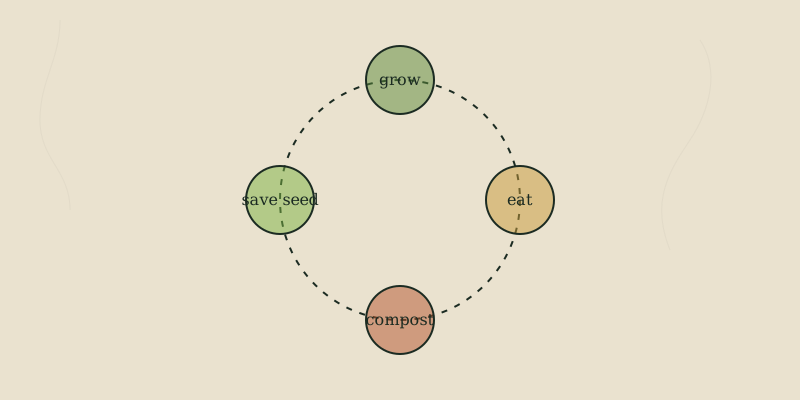
The dream of a self-sustaining farm isn't about buying nothing ever again — it's about closing loops. In a healthy natural system there's no waste: everything that's an output of one process is an input to another. The chicken's manure feeds the garden, the garden's scraps feed the chicken, and the sun and rain power all of it. Building a self-sustaining farm is the work of connecting these loops one at a time.
The core loops
- The fertility loop — kitchen and garden waste → compost → soil → food → waste again. Close this first; it's the foundation.
- The animal loop — animals eat scraps and forage → produce manure and food → manure feeds the garden → garden feeds the animals.
- The water loop — rain → catchment → garden and animals → some returns to the ground → recharges what you draw.
- The seed loop — plants → seed you save → next year's plants. No more buying seed for your staples.
- The energy loop — sun → plants and solar → work and food → you. The hardest to fully close, but solar and smart design get you far.
Start with compost
If you do one thing toward self-sufficiency, build a compost system. It turns your 'waste' into the fertility that grows your food, and it breaks your dependence on bought fertilizer. Everything organic — kitchen scraps, garden trimmings, leaves, animal bedding — goes in, and rich soil comes out. It's the beating heart of a closed-loop farm.
Add animals thoughtfully
Animals are loop-multipliers: chickens turn pests and scraps into eggs and fertilizer, and clear and till ground for you. But they also add daily work and dependency — they need feed, water, and protection every single day. Add them once your plant systems are stable, and choose animals whose loops fit your land.
Design before you build
The most self-sufficient farms are designed, not accumulated. Before building, sketch where the water flows, where the sun falls, how you'll move between zones, and how each element's output can feed another's input. Put the compost between the kitchen and the garden. Put the chickens where their manure is easy to move to the beds. Good design means the system does more of the work for you — for years.
Written by Jordan Polasek, founder of Texas Roots, from his greenhouse in El Campo, Texas. Free to share. If this helped, the best thanks is to grow something or pass it along.